What the high mountains teach us about the planet, vulnerability and one another
There is a profound connection between three places on Earth: the desert, the open sea and the high mountains.
None of them are places where human beings can simply live.
They exist outside the human habitat.
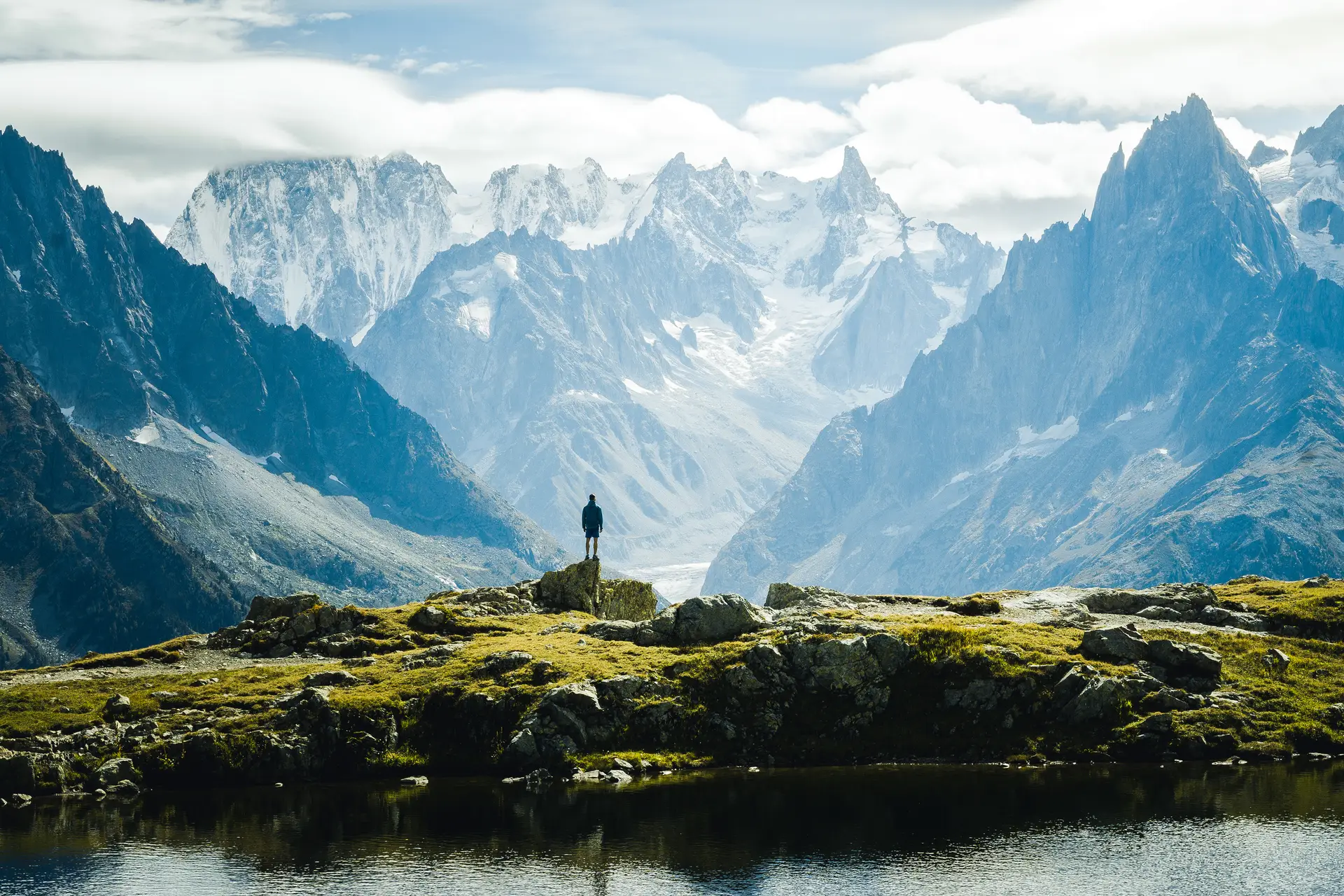
And because of that, the experience they offer is radically different from almost everything else in our lives. In these places, we encounter the planet directly. Not the planet as we have organised it, built upon it, illuminated it or made it comfortable for ourselves — but the planet as such.
Almost as it might have appeared on the first day of its formation.
There is something deeply exploratory about that experience.
You are outside the human world. There is no shelter unless you create it. No infrastructure unless somebody has put it there. No guarantee that the environment will adapt itself to you.
It will not.
You have to adapt to it.
And so, over time, human beings invented ways of resisting the constraints of these environments.
The desert invented the caravan.
The open sea invented the boat.
The high mountains invented the rope.
I have always found that last image particularly powerful.
I have a memory of being roped together in the mountains, and of realising that the rope had taught me something far beyond climbing.
It taught me something about human relationships.
Because a rope makes the relationship between two people physical.
Visible.
You protect me.
I protect you.
You help me.
I help you.
Your movement has consequences for me, and mine has consequences for you.
There is no abstraction to it.
When two people are tied together on a mountain, responsibility is no longer an idea. It is something you can feel between you.
In that sense, the rope almost becomes a material expression of what we might call the social contract.
It says: we are connected, and because we are connected, we are responsible for one another.
Perhaps that is one of the reasons the mountains continue to matter so much.
We often think of them as places of escape, freedom or individual achievement. And of course they can be all of those things.
But they also teach the opposite lesson.
They remind us that independence has limits.
That exposure creates interdependence.
That trust is not simply a feeling, but an action.
And that sometimes the most powerful relationships are created precisely because the environment does not allow us to pretend that we do not need one another.
The mountain strips away much of what usually separates us from the physical world.
And for a moment, we experience the planet differently.
Older than us.
Larger than us.
Indifferent to us.
But in that landscape, tied to another person by a few metres of rope, we may also understand something very human.
That survival, movement and exploration have never been entirely solitary acts.
Sometimes, the simplest object can carry an entire philosophy.
In the mountains, that object is the rope.